On this page
Why UGC-style creative still works on Meta
Meta’s delivery system has changed a lot over the last few years. Targeting is broader, automation does more of the buying, and the creative itself has become the main lever an advertiser controls. That is the real reason UGC-style video keeps showing up in winning ad accounts: it is not a trend, it is a response to how the auction now works.
When targeting is loose, the ad has to do the qualifying. A person talking to the camera about a specific problem (“my heels slip in every pair of boots I buy”) filters the audience in the first two seconds far better than a polished brand film does. The right people lean in, and the wrong people scroll, which is exactly what you want the algorithm to learn from.
UGC-style also matches the surface. Feed, Reels and Stories are full of people filming themselves on phones. An ad that looks like a clean studio spot reads as an interruption. An ad that looks like something a friend posted gets a fraction of a second more attention, and a fraction of a second is the whole game.
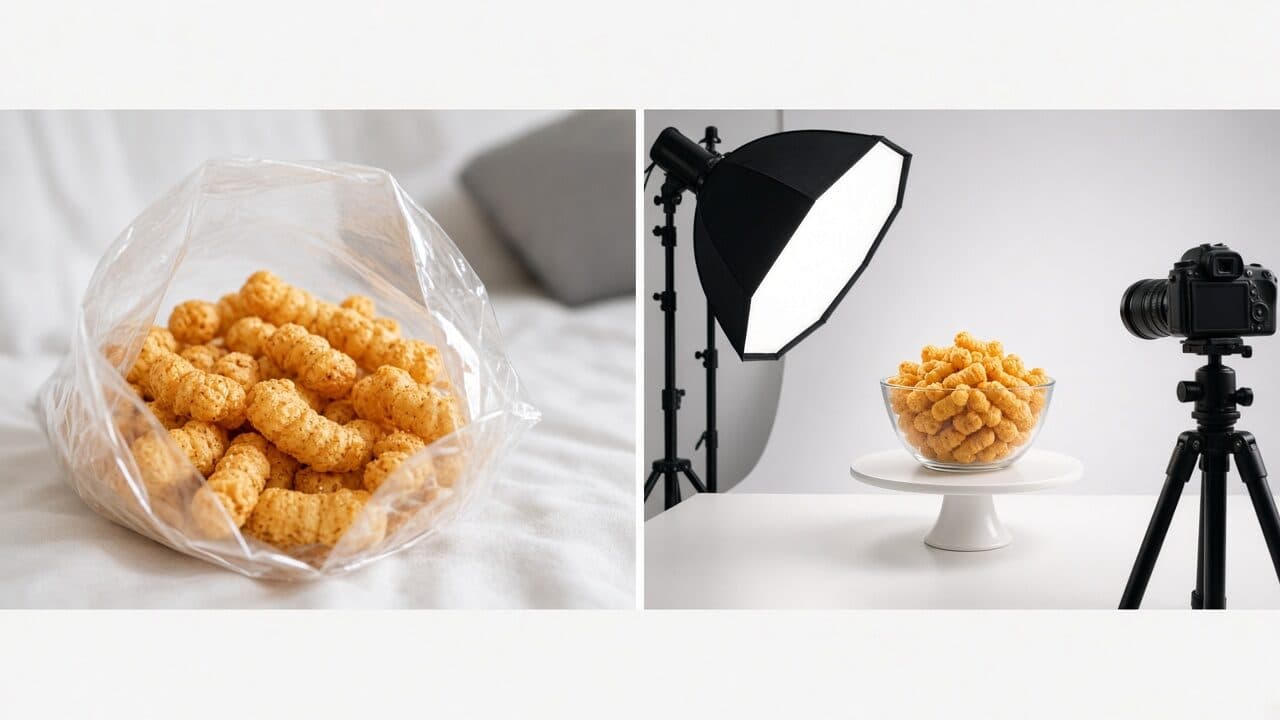
None of this means “shaky and low quality” wins. Clear audio, good light and a tight edit consistently beat sloppy footage. UGC-style describes the format, a person, a product, a believable situation, not the production value.
Creative patterns that hold up in ecommerce
Most winning Meta UGC ads for ecommerce are variations on a small set of structures. You do not need fifty ideas. You need five solid structures and a steady supply of new hooks, creators and product angles inside them.
Pick one structure per test so you can read the result. Mixing a testimonial opening with a demo middle and a comparison close makes it impossible to learn which part moved the numbers.
- Problem → product demo → result: the workhorse. Name a specific annoyance, show the product solving it on screen, close with the outcome.
- Honest review: a person shares what they like and one small caveat. The caveat is what makes the rest believable.
- Unboxing or first-impressions: works best for products with a tactile or visual payoff, such as packaging, texture or fit.
- Comparison: “I used to use X, here is why I switched.” Keep it factual and avoid naming competitors in ways that invite policy trouble.
- Routine or day-in-the-life: the product appears naturally inside a habit. Strong for consumables, skincare, drinkware and apparel.
- Founder or maker explainer: one person, one reason the product exists. Useful when your story is the differentiator.

Placements: build for 9:16 first, then check Feed
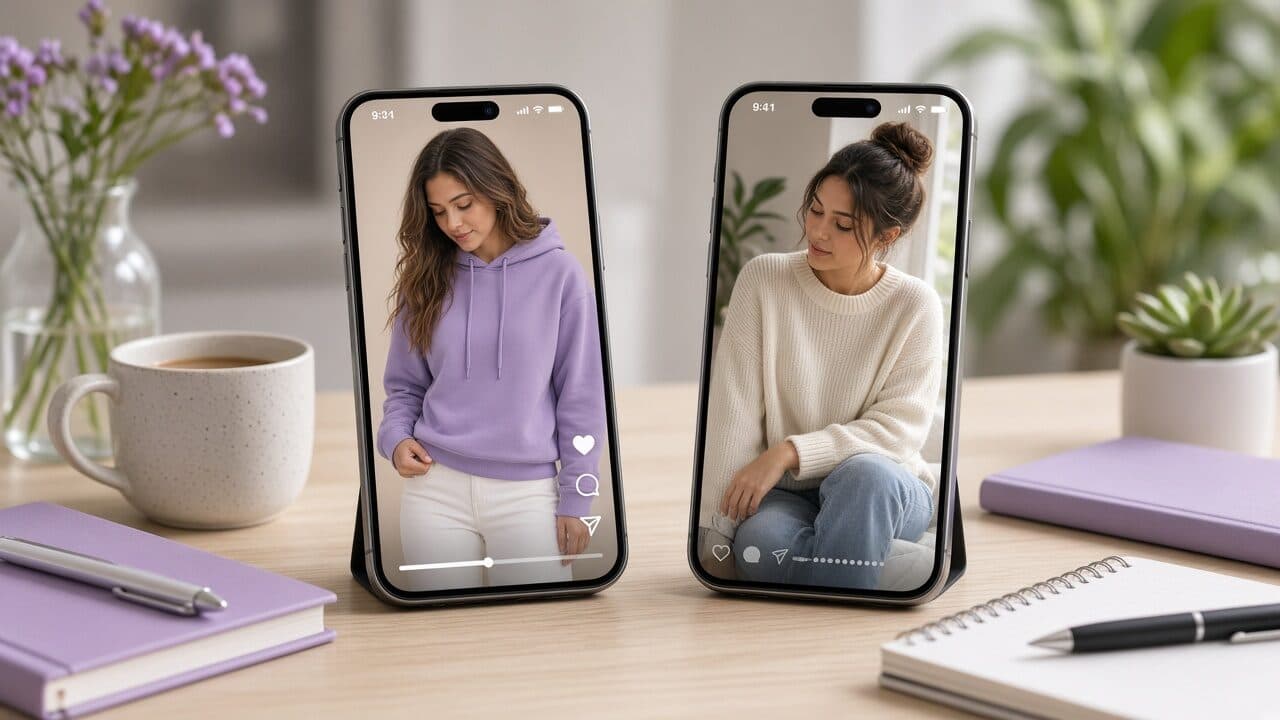
Reels and Stories are full-screen vertical placements, and a 9:16 video is the native format for both. Feed is more forgiving, since it displays vertical video but crops it, so 4:5 or 9:16 both work there. The practical rule for ecommerce teams is to build in 9:16 and then verify how it looks in Feed, not the other way around.
The part people skip is the safe zone. Meta overlays its own interface on vertical placements: the profile name and caption at the bottom, a call-to-action button, reaction icons on the side, and a progress bar at the top of Stories. Anything important placed in those regions can be covered. Keep your captions and key product shots inside the central area of the frame, and preview the ad in the Meta placement preview before you publish.
Use the placement previews rather than assuming. A caption that sits perfectly in your editor can collide with the CTA button on a real phone. If you are running the same file across Reels, Stories and Feed, check all three.
On the question of whether to let Meta pick placements or select them manually: for most ecommerce accounts, start with automatic placements and let the data show you which surfaces are wasting money. Cut a placement only when you have enough spend to be confident the weakness is real and not noise.
The first three seconds: hooks that earn the watch
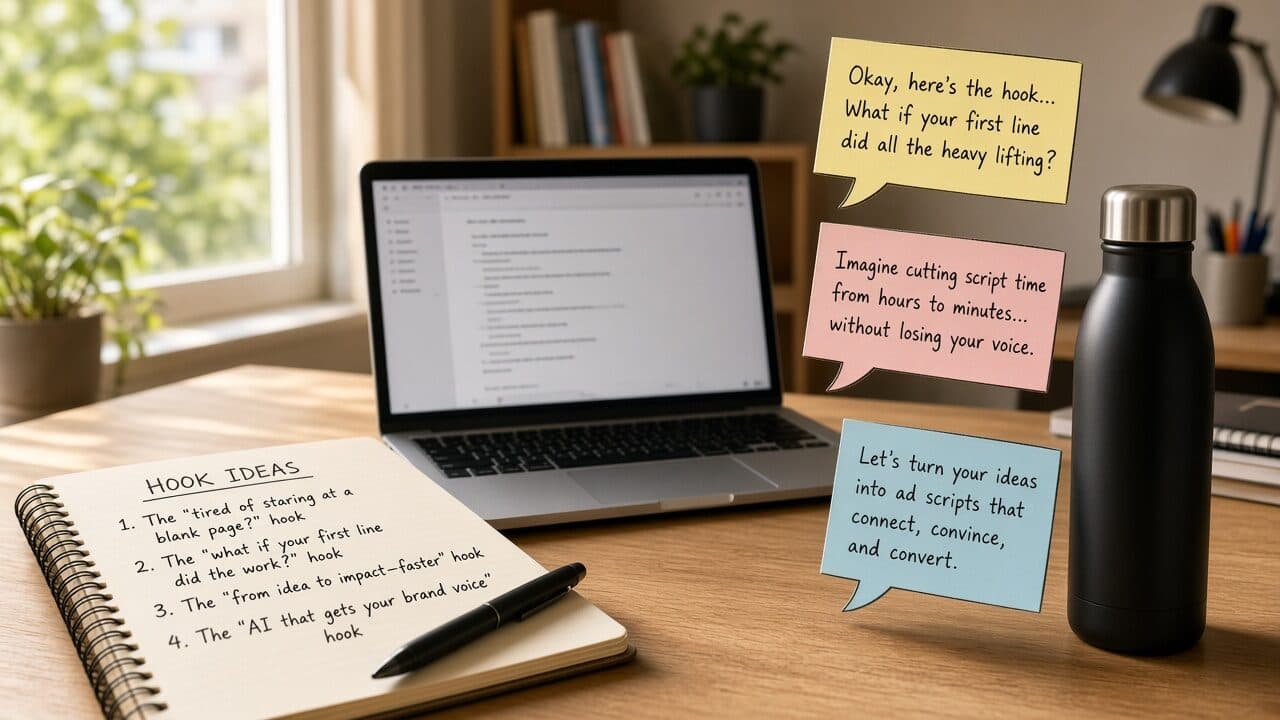
On Meta, you are competing with the next post in the feed, so the opening has to do one job: make the right person stop. That means a specific claim, a visual that is slightly unexpected, or a line that sounds like the viewer’s own inner monologue.
Avoid hooks that need context. “Okay so I have to tell you about this” gives the viewer nothing to react to. “These are the only running socks that haven’t blistered my heel” gives them a reason to keep watching or leave, and both outcomes are useful signal.
Write three hook variants for every body you shoot, the same way you would for TikTok product ads that convert. The body of a UGC ad is usually the cheapest part to reuse. A new hook on a proven body is the fastest way to extend an ad’s life.
One body, three hooks (running socks)
- Hook A (pain): “If your socks bunch up by mile three, this is for you.”
- Hook B (proof): “I ran a half marathon in these and checked my feet after.”
- Hook C (contrarian): “Stop buying cushioned socks. Here is what actually matters.”
- Shared body: show the heel lock, show the seam, state the one caveat (runs snug), close on the offer.
Advantage+ vs manual creative testing
Meta’s Advantage+ sales campaigns (previously branded as Advantage+ Shopping) hand most audience and placement decisions to the system. For many ecommerce brands that works well, because the algorithm is good at finding buyers. What it does not do is tell you why a creative worked.
That is the tradeoff. Automation is strong at scaling a known winner. Manual structures are better at isolating a variable. Most healthy accounts use both: a testing campaign where each ad set or ad isolates one idea, and an Advantage+ campaign where proven creative gets room to scale.
A simple operating model: test new concepts in a controlled structure with a modest, fixed budget. When an ad clears your target cost per purchase with enough conversions to trust, graduate it into your scaling campaign. Do not dump twenty untested videos into Advantage+ and hope; you will see spend concentrate on one or two ads and learn very little about the rest.
Interface names and defaults change, so treat the specifics as a moving target. The principle is stable: separate learning from scaling, and make sure each test answers one question.
- Testing campaign: one concept per test, 3–5 ads, same audience and offer, fixed budget.
- Scaling campaign: only graduated ads, broad targeting, budget increases in steps rather than jumps.
- Naming convention: include concept, hook, creator and format in the ad name so results are readable months later.
Budget discipline: how much to spend before deciding
The most common way to waste a good creative is to kill it too early. The second most common is to let a bad one run too long. Both come from not deciding the rules before spending the money.
Before launching a test, write down what “winner” and “loser” mean: a target cost per purchase or per add-to-cart, a minimum spend per ad, and a minimum time window. A reasonable minimum spend is a multiple of your target acquisition cost, so you give the ad a real chance to convert rather than judging it on a handful of clicks. Pick your own multiple based on your margins and stick to it.
Leading indicators help while you wait. Thumb-stop rate, hold rate and outbound click-through tell you whether the creative is working on attention even before purchases accumulate. But they are diagnostics, not verdicts. A high-attention ad that sends people to a mismatched page still loses money.
Resist the urge to edit running ads. Changing copy, creative or budget sharply resets learning and muddies the data. If you want to change something, duplicate and test the new version as a separate ad.
Message match: the ad and the page have to agree
A UGC ad creates a specific expectation. If the creator says “this is the only gym bag that fits my shoes separately,” the landing page needs to show that feature in the first screen. When it opens on a generic homepage banner, the visitor assumes they are in the wrong place and leaves.
Message match covers four things: the product shown, the claim made, the offer stated, and the visual tone. Check all four. If the ad promises free shipping, the page should say so above the fold. If the ad shows the navy colorway, the page should default to navy.
Where possible, send traffic to a product page or a purpose-built landing page rather than a collection page. Collection pages make people choose, and a viewer who arrived on a single idea does not want a menu.
Also keep the creative and the ad copy consistent. The primary text, headline and on-screen captions should reinforce one idea, not three.

AI-generated creative: disclosure and Meta’s labels
More brands now use AI UGC ads and other AI tools to produce parts of their ad creative, from scripts and voiceover to full synthetic presenters. Meta has been building labeling around AI-generated content, and its advertising policies include disclosure expectations in certain cases, such as realistic synthetic content in ads about social issues, elections or politics. Ads can also pick up an “AI info” style label when Meta detects industry-standard AI signals or when the content was created with Meta’s own generative tools.
Policies and label wording change often, so read the current Meta advertising standards and the ad tool’s disclosure options rather than relying on a blog post, including this one. If the ad creation flow asks whether content is AI-generated, answer honestly.
Beyond platform rules, there is a plain trust question. Do not present a synthetic person as a real customer with a real, specific experience. Do not fabricate reviews, before-and-after results or medical claims. An AI presenter demonstrating a real product with truthful claims is a very different thing from an invented testimonial.
Practical guardrails: keep claims limited to what you can substantiate, use real product footage or accurate renders, avoid implying an independent endorsement that does not exist, and keep a record of what was generated and how. If an ad disclosure is required or recommended, treat it as a feature, not a penalty. Honest creative performs fine.
Creative fatigue and a refresh cadence that works
Every ad wears out. The signs are familiar: frequency climbing, click-through falling, cost per purchase creeping up while the audience stays the same. The fix is rarely a complete rebuild. It is usually a faster supply of variations.
Think in layers. The hook is the cheapest layer to change and delivers the biggest lift. The creator or presenter is next, since a new face feels like a new ad even with the same script. The angle (what problem you lead with) and the offer come after that. Reserve full concept changes for when a whole direction is exhausted.
Set a weekly rhythm rather than waiting for a crisis. A small, steady flow of new tests is easier to manage than an emergency reshoot, and it keeps your scaling campaign supplied with graduates.
A simple weekly creative rhythm
- Monday: review last week’s tests against your pre-written winner/loser rules.
- Tuesday: brief 3 new hooks on the best-performing body.
- Wednesday: produce and QC in 9:16, preview all placements.
- Thursday: launch the new test with a fixed budget.
- Friday: pause clear losers, log learnings in a shared sheet.
Pre-launch checklist for Meta UGC ads
Run this list before every launch. It takes five minutes and catches most of the avoidable losses. For file specs and safe-zone detail, use our vertical video ads checklist.
- Format: 9:16 export, key content inside the safe zone, previewed in Feed, Reels and Stories.
- Hook: the first three seconds state a specific problem, claim or visual.
- Sound: clear voice, captions burned in or enabled, and readable with the sound off.
- Claims: every statement can be substantiated, and none implies a guaranteed outcome.
- Disclosure: any AI-generated elements handled according to current Meta policy.
- Message match: product, claim, offer and tone agree between ad and landing page.
- Tracking: pixel and conversion events firing, UTM parameters set, ad names follow your convention.
- Test design: one variable changed, budget and success rules written down.
Putting it together
The accounts that do well with Meta UGC ads are rarely the ones with the cleverest single idea. They have a repeatable system: a handful of proven structures, a steady stream of new hooks, disciplined testing, and a landing page that finishes the job the ad started.
If producing that volume of vertical creative is the bottleneck, tools like VELO Shorts can generate UGC-style product videos from a product page, which makes it easier to test more hooks and presenters without waiting on a shoot. Whatever you use, keep the claims honest and the testing disciplined, because that is what actually compounds.
FAQ
Do UGC-style ads actually outperform polished brand ads on Meta?
Often, but not always. UGC-style ads tend to win on attention and trust in cold audiences because they match the native look of Feed and Reels. Polished creative can still work for retargeting or premium brands. Test both against the same offer and let your numbers decide.
What aspect ratio should Meta UGC ads use?
Build in 9:16 for Reels and Stories, and verify how it crops in Feed. Keep captions and key product shots inside the central safe area so Meta’s interface elements don’t cover them, and always check the placement previews before publishing.
Should I use Advantage+ or manual campaigns for creative testing?
Use both for different jobs. Manual structures isolate one variable per test so you learn why something worked. Advantage+ campaigns are strong for scaling creative that has already proven itself. Test first, then graduate winners.
Do I need to disclose AI-generated video in Meta ads?
It depends on the content and on Meta’s current policies. Some categories, such as realistic synthetic content in social issue or political ads, have explicit disclosure requirements, and Meta may add its own AI labels. Check the latest advertising standards, answer any disclosure prompts honestly, and never present a synthetic person as a real customer.
How often should I refresh ad creative?
Watch frequency, click-through rate and cost per purchase rather than following a fixed calendar. Many teams run a weekly or biweekly cycle of new hooks on proven video bodies, which extends ad life without constant full reshoots.