On this page
What AI UGC Ads Actually Are
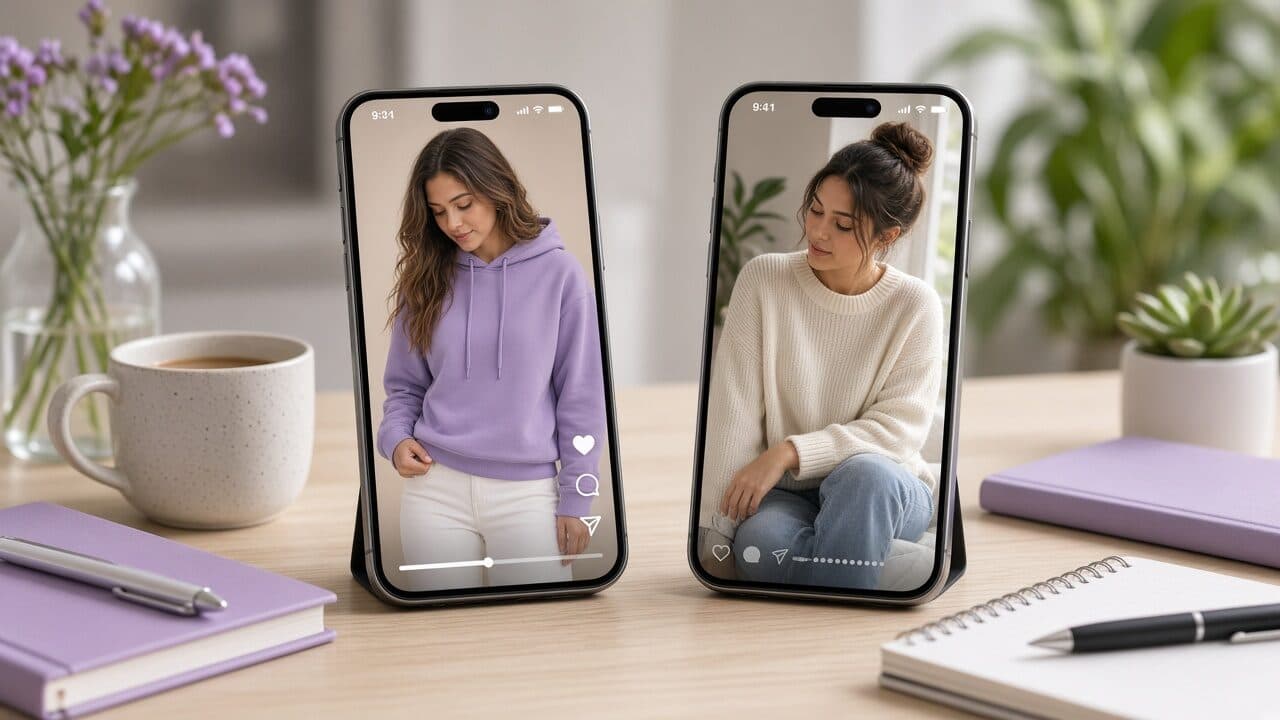
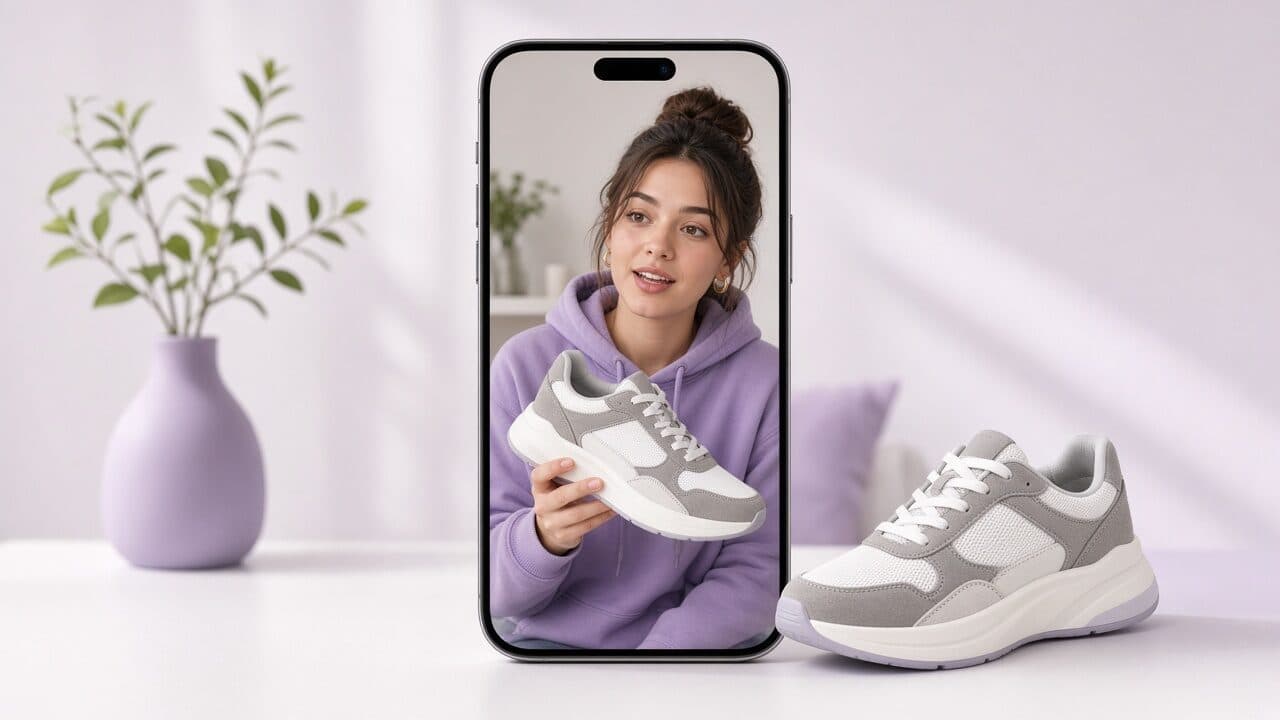
AI UGC ads are short vertical videos that look and sound like a real customer talking about a product, except the footage is generated or assembled with AI instead of filmed with a hired creator. The format borrows everything that made user-generated content work in paid social: handheld framing, casual delivery, a spoken hook in the first second, and a plain-language reason to buy.
For an ecommerce brand, the appeal is simple. Creative is the biggest lever on Meta and TikTok, and the bottleneck is volume. Most stores need far more distinct ads than they can brief, ship product for, and edit by hand. AI UGC video ads remove most of that logistics work so you can spend your time on angles and offers.
This guide is the operator version. It covers how the format works, what to produce, how to test it, what to disclose, and where it breaks. If you are new to the category, start with our explainer on what an AI UGC video generator is and how it works.
Why UGC-Style Ads Work on Meta and TikTok
Feeds are full of polished brand content that people have learned to scroll past. A video that looks like it came from a person, shot on a phone, talking directly to camera, reads as a recommendation instead of an interruption. That is the whole mechanism. It is not magic, and it is not new.
Both platforms also reward fresh creative. Ad accounts that run the same two videos for months see fatigue, rising costs, and shrinking reach. The accounts that keep scaling usually have a steady stream of new angles in rotation. That is a production problem as much as a strategy problem, which is why AI UGC ads for ecommerce have taken off. For a platform-specific breakdown of hooks, pacing, and offers, see TikTok product ads that convert.
- The first second decides whether anyone watches. A spoken or on-screen hook beats a logo animation every time.
- Native-looking vertical video fits placements like Reels, Stories, and TikTok feeds without cropping.
- Casual delivery lowers the viewer's guard. Overproduced ads trigger the skip reflex faster.
- Variety matters more than perfection. Ten decent angles usually teach you more than one flawless video.
AI UGC Ads vs Human Creators: A Practical Comparison
This is not an either-or decision. Human creators and AI UGC ads solve different problems, and the best accounts usually use both. The question is which one you reach for at each stage.
Human creators are strongest when you need genuine experience: someone actually using a skincare routine for a month, a parent testing a stroller, a real reaction to taste or fit. Audiences can sense authenticity, and a strong creator video can become a long-running winner.
AI generation is strongest when you need speed and volume: testing ten hooks on a new product, refreshing fatigued ads, localizing into new markets, or validating an angle before you pay for a shoot. It costs less per variation and has no shipping delay, scheduling, or revision rounds.
- Use AI first to find which angles and hooks get attention at low cost.
- Use human creators to double down on angles that already prove out and need real-world credibility.
- Keep a small human library for claims that depend on lived experience, like durability, taste, or results over time.
- Never use AI to invent a personal experience that did not happen. More on that in the compliance section.
The AI UGC Ad Production Pipeline
A reliable pipeline keeps quality consistent when you are producing dozens of videos a week. Whether you use an AI UGC generator or stitch tools together, the steps are the same. Skipping one of them is where most weak output comes from.
Start with the product, not the avatar. Clear product imagery, accurate dimensions, real packaging, and a short list of true benefits matter more than any model choice. If the input is vague, the output will be generic.
- Inputs: three to six clean product photos, a one-line value proposition, the target customer, and any claims you can substantiate.
- Angle: pick one idea per video, such as a problem, a comparison, a gift occasion, or a feature demo.
- Script: write a hook, one or two proof points, and a clear call to action in under 30 seconds of spoken words.
- Generate: produce the presenter, product shots, and voice, then assemble them with captions.
- Review: watch every video at full volume on a phone before it goes live.
- Export: deliver in 9:16 with safe margins so platform UI does not cover text.
Hooks That Stop the Scroll in AI UGC Video Ads
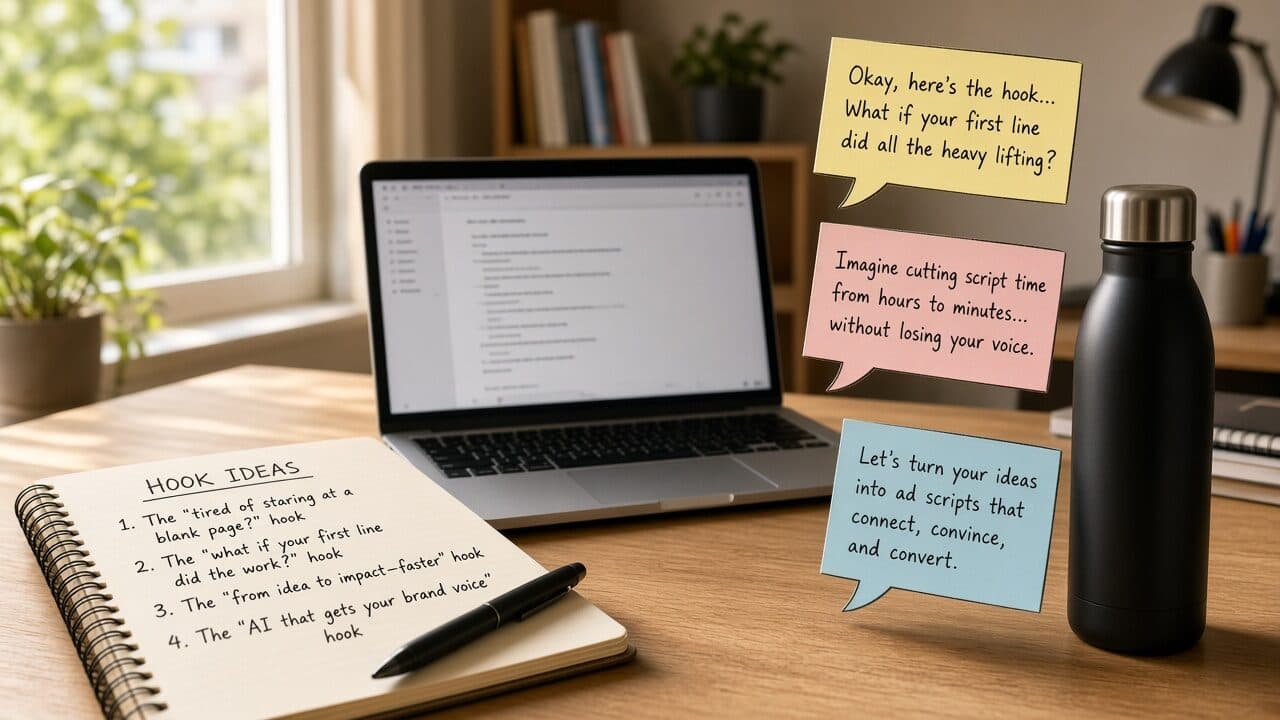
The hook is the first one to three seconds, spoken and written on screen. It carries more weight than the rest of the ad combined, because everything after it only matters if the viewer stays. Strong hooks name a specific problem, make a specific claim, or create a specific curiosity gap.
Avoid hooks that could apply to any product. Generic openers like "You need to see this" burn your best second. Specific hooks speak to one person with one problem, and that specificity is what makes a viewer feel the ad was meant for them.
Hook patterns you can adapt
- Problem: "My feet hurt after every shift until I switched to these."
- Comparison: "I stopped buying the expensive one. Here's why."
- Objection: "I thought a $30 blender would break in a week. It didn't."
- Gift: "This is the gift I give when I have no idea what to buy."
- Curiosity: "Nobody tells you this about cold brew bottles."
Writing Scripts for AI UGC Ads That Sound Human
Scripts for AI UGC ads fail for the same reason bad creator scripts fail: they read like copy instead of speech. Write the way someone talks to a friend. Use contractions, short sentences, and one idea per line. Read it aloud before you generate anything. If you stumble, the voice model will too.
A reliable structure is hook, problem, proof, offer, call to action. Keep the whole thing between 20 and 35 seconds for most cold-traffic ads. Shorter works for retargeting, where the viewer already knows you. For more templates you can adapt, see our guide to AI product video ad scripts.
Proof is where ecommerce scripts get lazy. Replace adjectives with specifics. "Great quality" means nothing. "The lid stays on when it tips over in my bag" is a reason to believe.
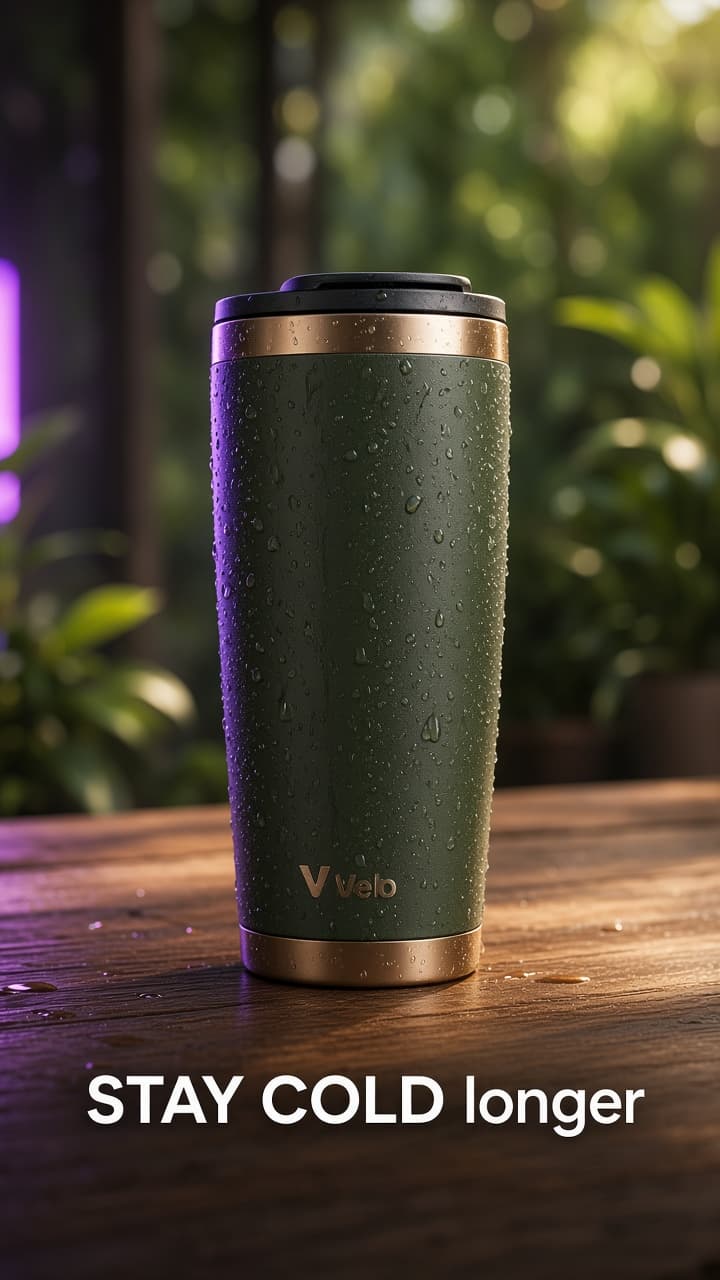
Sample 25-second script structure (drinkware)
- 0-3s Hook: "My old bottle leaked in my bag every single week."
- 3-9s Problem: "I'd find a wet laptop and a ruined notebook. Done with that."
- 9-18s Proof: "This one has a locking lid and keeps ice for a full workday. I tested it on a long commute."
- 18-23s Offer: "It comes in four colors, and shipping is free over a set amount."
- 23-25s CTA: "Link's below if you want to try one."
Building a Creative Testing System for AI UGC Ads
Volume without structure just produces noise. The reason to generate many AI UGC ads is to learn quickly, and learning requires that you change one thing at a time. Treat each video as a test of a single variable: the hook, the angle, the presenter, or the offer.
A simple weekly rhythm works for most stores. Launch a batch of new variations on Monday, give them enough spend to produce a signal, cut the clear losers midweek, and promote the survivors into your main campaigns. Then write down what you learned.
- Test hooks first. Keep the body identical and change only the first three seconds.
- Then test angles. Run the winning hook across different problems or use cases.
- Then test presenters and settings once you know the message works.
- Name every ad with its hook, angle, and presenter so results are searchable later.
- Set a rule before launch for when an ad is cut, so you do not decide based on mood.
- Keep a log of winners and losers. Patterns across weeks are worth more than any single result.
Measuring AI UGC Ad Performance Without Fooling Yourself
Measurement is where good creative programs quietly go wrong. Platform dashboards are useful but incomplete, and early numbers on small spend can mislead you. Decide up front which metrics matter at each stage, and resist the urge to crown a winner after a few hours.
For the creative itself, watch the hook rate (how many people stay past the first seconds), hold rate (how many keep watching), and click-through rate. For the business, watch cost per purchase and blended return across your whole store, not only what the ad platform attributes to itself.
If an ad gets attention but no sales, the problem is usually the landing page, the offer, or the audience, not the video. If it gets sales but a weak hook rate, you may be leaving cheap reach on the table. Read the pattern before you change anything.
- Compare ads inside the same campaign and time window, not across different weeks.
- Give each variation a similar budget so one does not win just by getting more delivery.
- Check blended revenue against ad spend to catch attribution gaps.
- Review comments on every ad. They show objections you can turn into the next script.
AI UGC Ads for Shopify and Product-Led Stores
If you run a Shopify store, you already have most of what an AI UGC generator needs: product photos, titles, descriptions, reviews, and variant data. That catalog is a ready-made source for angles and scripts, and it scales across hundreds of SKUs in a way manual shoots never will. If you want to start from a single catalog image, see how to turn one product photo into video ads.
Use your reviews as raw material. Customers already describe your product in their own words, and those phrases make the most believable hooks. Pull recurring praise and recurring complaints, then write scripts that address them directly.
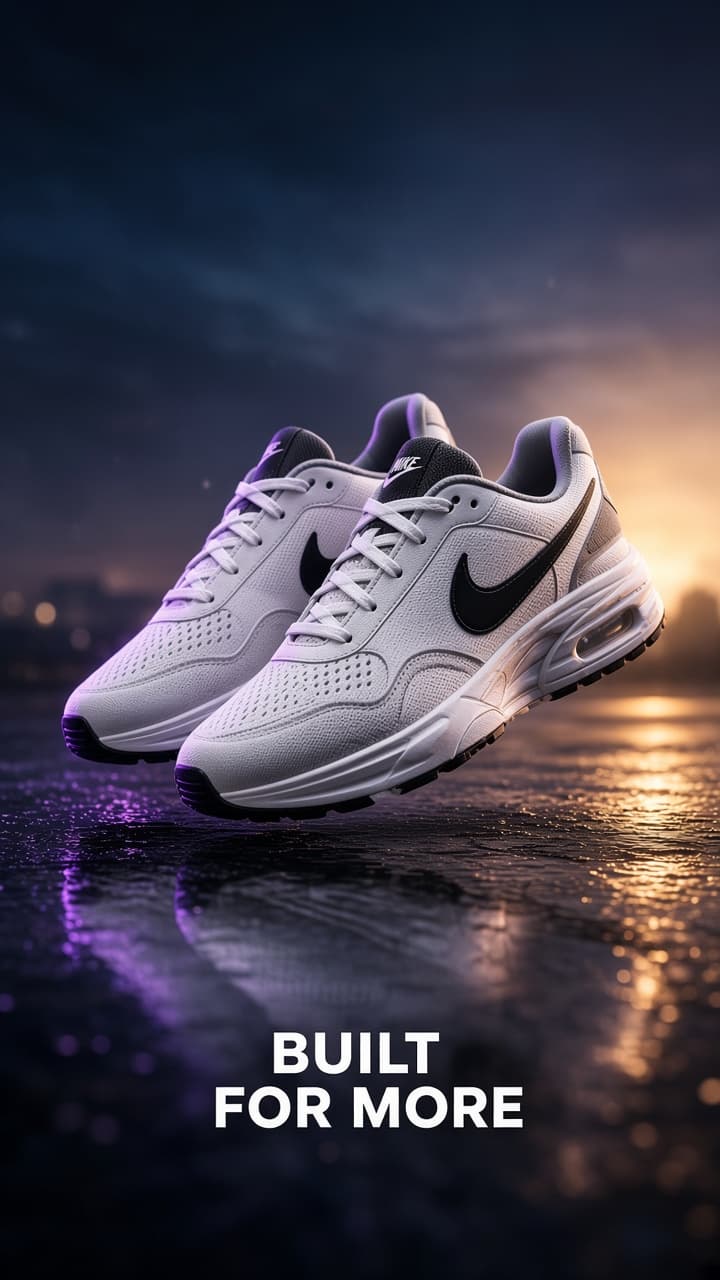
Match the creative to the product's job. A footwear ad should show fit, movement, and comfort. An electronics ad should show the feature in use. A snack ad should lead with taste and occasion. Do not apply one template to every SKU.
- Start with your top five sellers, where a small lift pays back fastest.
- Create separate ads for new customers and for returning buyers or bundles.
- Send each ad to the product page it talks about, not the homepage.
- Refresh creative on bestsellers before fatigue shows up in your numbers.
Compliance, AI Labels, and Disclosure for AI UGC Ads
Using AI does not exempt an ad from the usual rules, and platform policies on synthetic media keep evolving. Check the current advertising policies for Meta, TikTok, and any other channel you run before you scale. Rules change, and what is acceptable in one region may not be in another.
Several principles hold up regardless. Do not make claims you cannot support. Do not present an AI-generated presenter as a real person describing a real, personal experience. Do not imply medical, financial, or performance results that the product does not deliver. Where a platform offers an AI label or disclosure toggle, use it when it applies.
This is general operating guidance, not legal advice. If you sell in regulated categories, such as supplements, skincare with health claims, or financial products, have someone qualified review the copy.
- Keep a claims document for every product with the evidence behind each statement.
- Use AI presenters to demonstrate and explain, not to fabricate testimonials.
- Apply platform AI disclosure labels where required or offered.
- Re-check policies each quarter, since enforcement and wording shift.
- Do not use real people's likeness or voice without permission.
Common Mistakes That Waste Budget on AI UGC Ads
Most disappointing results trace back to a short list of avoidable errors. None of them are about the technology. They are about process and judgment.
The biggest one is treating generation as the finish line. Producing a video is cheap now. Deciding which videos deserve spend is where the skill is. An unreviewed batch pushed straight to ads will teach you very little and cost you real money.
- Shipping without review. Check lip sync, product accuracy, caption timing, and audio on a phone.
- Showing the wrong product details, such as colors, logos, or proportions that do not match what you sell.
- Using one hook everywhere and calling it a test.
- Over-polishing. A slightly rough, casual look usually beats a glossy one in these placements.
- Ignoring the landing page. Great ads cannot fix a weak product page.
- Killing ads too early on thin data, or keeping losers too long out of hope.
- Making claims the product cannot back up, which risks rejected ads and refunds.
A Weekly AI UGC Ads Workflow You Can Copy
A repeatable cadence matters more than any single clever idea. The workflow below fits a small team or a solo operator, and it keeps creative moving without taking over the week.
Adjust the numbers to your budget. A store spending modestly may run five variations a week, while a larger account may run thirty. The sequence stays the same.
One-week cadence for a single product
- Monday: pick one product, pull reviews, and write five hooks for one angle.
- Tuesday: generate five videos with the same body and different hooks, then review each on a phone.
- Wednesday: launch them in one test campaign with equal budgets.
- Friday: cut the weakest, note hook and hold rates, and promote the top one or two.
- Next Monday: take the winning hook and test it across two new angles or presenters.

Trying This With VELO Shorts
If you want to put this workflow into practice, VELO Shorts is an AI UGC generator built for ecommerce. You bring a product and an idea, and it helps you produce short vertical videos ready for Meta and TikTok, so you can spend your time testing angles instead of coordinating shoots.
You do not need to rebuild your whole creative process at once. Pick one bestseller, make a handful of hook variations, and see what the data says. If the approach earns its place, expand from there. You can try it at veloshorts.app.
FAQ
What are AI UGC ads?
AI UGC ads are short, creator-style product videos made with AI rather than filmed with a hired creator. They imitate the look of user-generated content, with a presenter speaking to camera, casual framing, and captions, so they feel native in feeds like Reels and TikTok. Ecommerce brands use them to produce many variations quickly and test which hooks and angles work.
Do AI UGC ads actually perform as well as real creator videos?
It depends on the product and the claim. For testing hooks, refreshing fatigued ads, and demonstrating a product, AI UGC video ads can perform well and cost far less per variation. For claims that rely on real lived experience, human creators are often more credible. Many brands use AI to find winning angles, then invest in human creators for the proven ones.
Do I have to disclose that an ad uses AI?
Platform and regional rules vary and change over time, so check the current policies for each channel you advertise on. As a general practice, use any AI label or disclosure option the platform offers when it applies, and never present an AI presenter as a real person sharing a genuine personal experience. For regulated categories, get qualified review.
How many AI UGC ads should I test at once?
Start small enough that each variation gets a meaningful budget. Many stores begin with three to five hook variations on one product, keeping the rest of the video identical. Once you identify a winning hook, test it across new angles or presenters. More volume is useful only if you can read the results and act on them.
Can I make UGC ads for ecommerce if I have no video experience?
Yes. An AI UGC generator handles the presenter, voice, and assembly, so you mainly supply clear product images, a true value proposition, and a script with a strong hook. The skill that matters most is judgment: choosing angles, reviewing output carefully, and testing with discipline. Basic video editing is not required.