On this page
Native creative rules for TikTok product ads
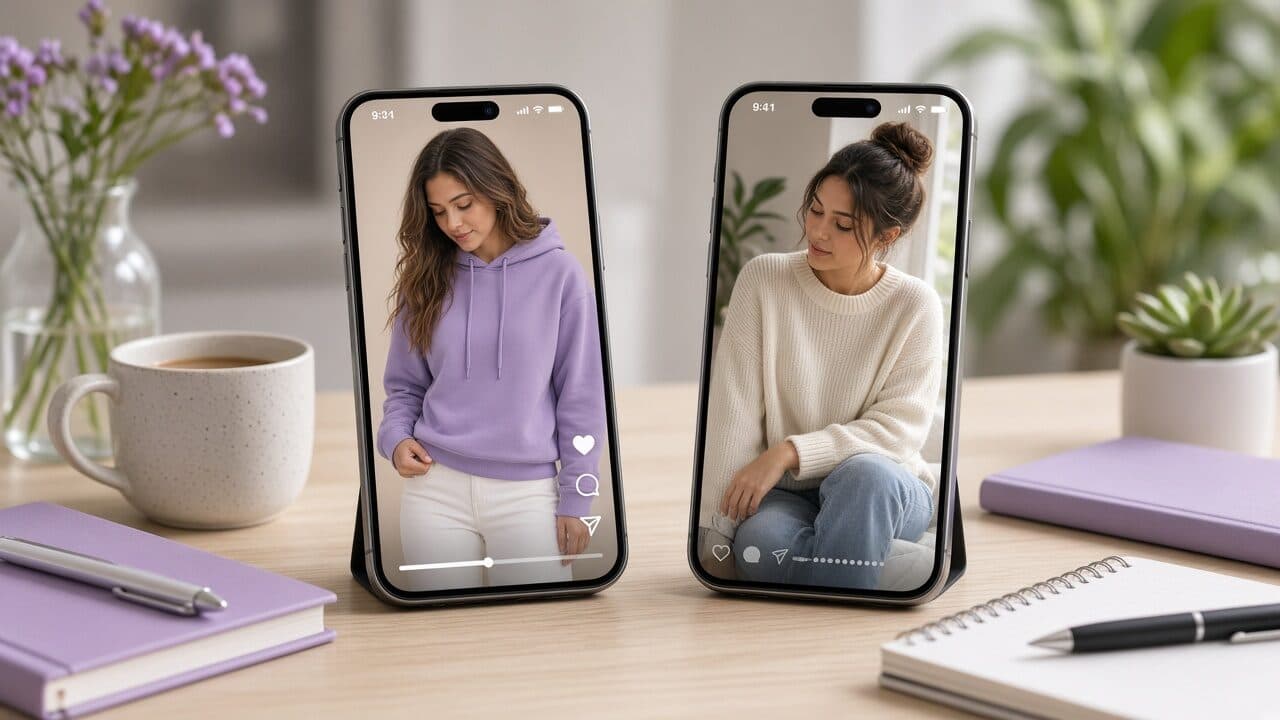
The first rule of TikTok product ads is that the ad competes with entertainment, not with other ads. Viewers are one swipe from a video they chose, so an ad that looks like a commercial gets swiped in the first second. The winners tend to look like they belong in the feed: handheld framing, a real-sounding voice, captions, and a person speaking directly to the viewer.
Native does not mean low effort. It means matching the grammar of the platform: motion or a face in the first frame, a spoken hook rather than a logo sting, quick cuts that show the product doing something, and a payoff that arrives quickly. Heavy intros, slow zooms and brand slogans kill retention before the offer arrives.
Think of each TikTok ad as a tiny story with a promise at the start, proof in the middle and an action at the end. Everything that does not serve one of those three jobs gets cut. That discipline is what separates TikTok UGC ads that scale from ones that burn a test budget, and the same logic applies to Meta UGC ads for ecommerce.
- Put a person or motion in frame zero; avoid logo intros.
- Speak the hook out loud and caption it at the same time.
- Show the product in use within the first three seconds.
- Keep production casual: natural light, phone framing, real settings.
- One message per video; one call to action.
Ten hook formulas for TikTok ad creative, with examples
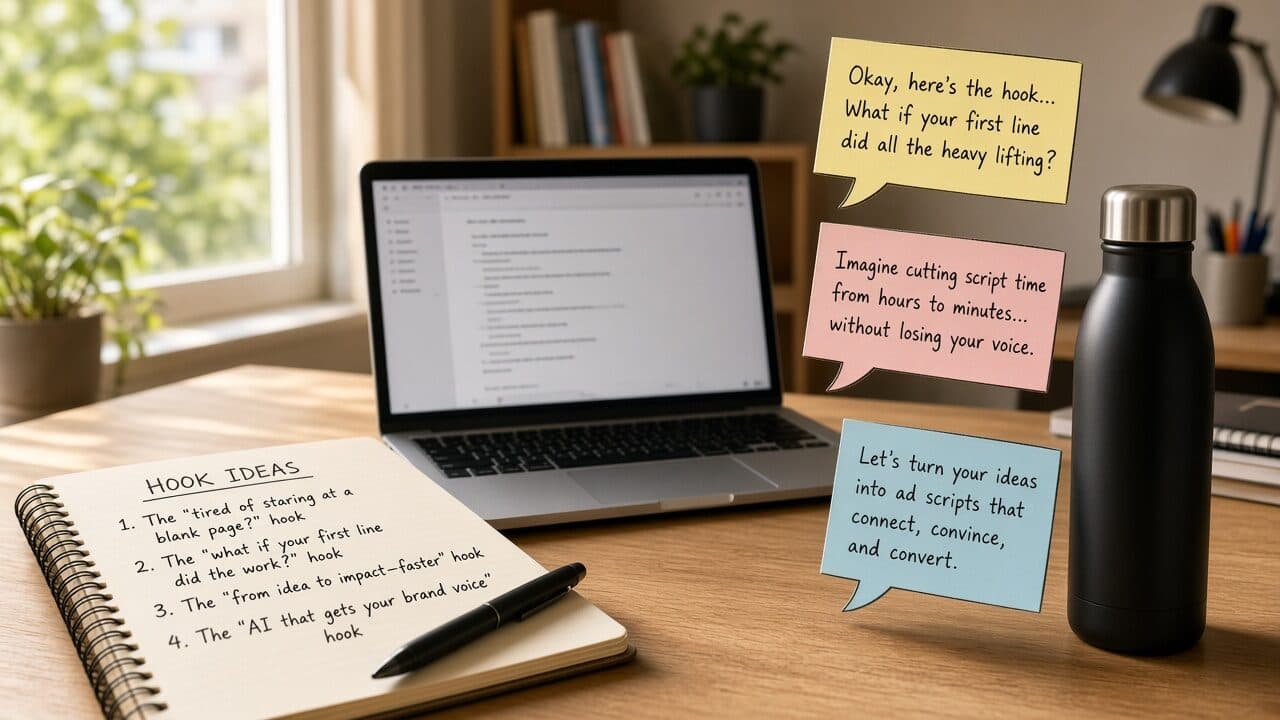
The hook is the first one to three seconds, and it deserves most of your creative effort. Because TikTok is a testing platform, the best approach is to build a library of formulas and rotate your product through them, rather than trying to write one perfect line. Our guide to AI product video ad scripts shows how to keep each one sounding human.
Each formula below attacks a different reason someone might stop scrolling. Which works best varies by product and audience, which is why you test several. The examples are placeholders for a travel bottle, a hoodie and a snack brand; replace them with your own details and keep claims you can back up.
Hook formulas you can reuse
- 1. Problem: “If your water is warm by lunch, watch this.”
- 2. Result: “This is what my desk looks like after one week with this organizer.”
- 3. Objection: “I thought this was overpriced until I checked what’s inside.”
- 4. Call-out: “If you run in the mornings and your earbuds fall out, this is for you.”
- 5. Curiosity: “I didn’t expect this to be the part I’d actually use every day.”
- 6. Comparison: “Same price as a regular hoodie, but look at the weight.”
- 7. Social proof: “This got more questions in my comments than anything I’ve posted.” (use only if true)
- 8. Mistake: “Stop buying snacks that leave you hungry an hour later.”
- 9. Demonstration: “Watch what happens when I pour this upside down.”
- 10. Myth-bust: “You don’t need a big bag to carry everything. Here’s why.”
Length and pacing: how long should TikTok product ads be?
Most converting TikTok ads for lower-cost products land between fifteen and thirty seconds, but length is not the goal; completeness is. The ad should be long enough to deliver the hook, proof and call to action and not a second longer. If you can sell in fifteen seconds, do not stretch to thirty.
Pacing matters more than total length. Change something visually every two to three seconds: a cut, a zoom, a new angle, a text callout or a product close-up. This resets attention and keeps the eye engaged. Static talking-head stretches longer than a few seconds are where viewers leave.
Higher-priced or more complicated products can justify longer ads, since the buyer needs more reassurance. Still, structure them in clear chapters, such as problem, solution, proof, offer, with a visible reason to keep watching at every transition.
- Cheap, simple product: 12–25 seconds.
- Mid-priced product needing proof: 20–40 seconds.
- Complex or high-consideration product: up to 45–60 seconds, with chapters.
- Visual change every two to three seconds.
- Land the call to action in the last three to five seconds, and repeat it in text.
Design for sound-off and sound-on
TikTok is a sound-on platform more than most, but you cannot assume that, and many viewers watch in public or quiet places. Design every ad so it works muted: large captions that carry the spoken hook, on-screen text for the key benefit and visuals that make sense without audio.
When sound is on, voice quality matters. An overly bright or robotic voice is a quick signal that something is off, so choose a natural voice, a moderate pace and pauses where a person would breathe. Keep any background music well below the voice, and use only music you have the right to use in ads.
Place captions where they will not be covered by TikTok's own interface. Keep them in the central area, away from the bottom, where the username and description sit, and away from the right edge, where the action buttons appear.
A 20-second structure that works for TikTok UGC ads
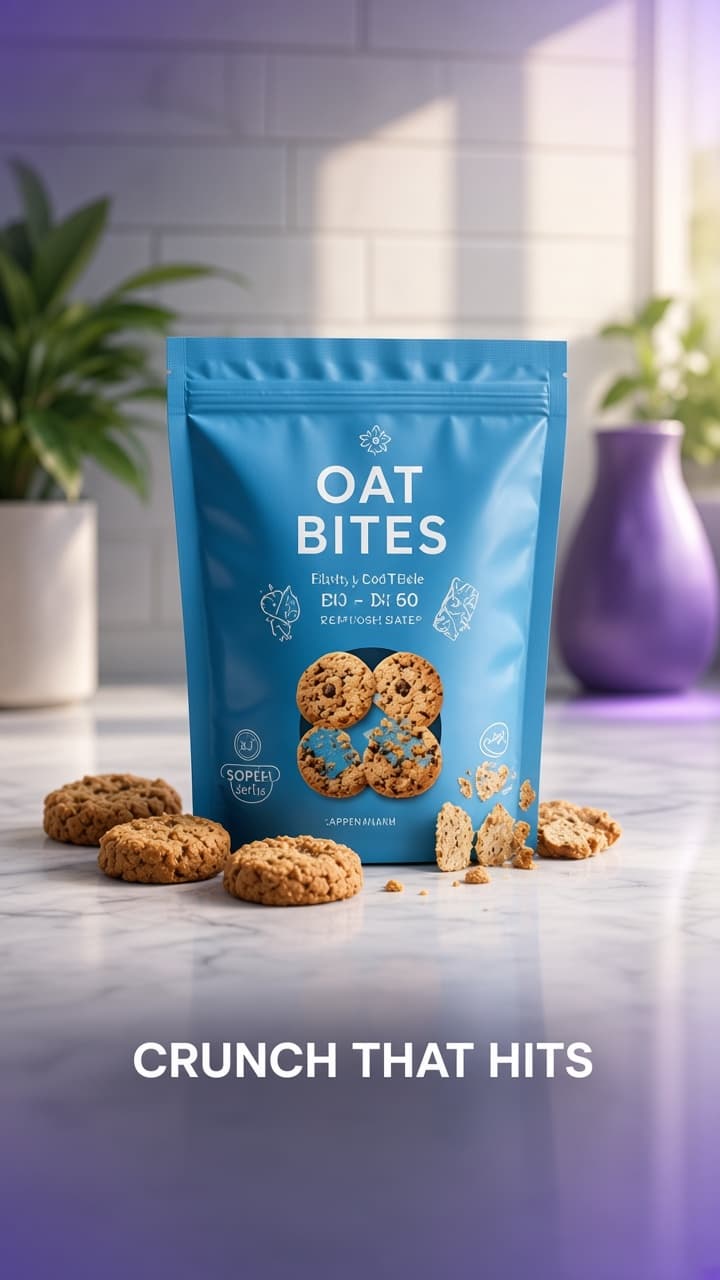
A reliable structure for short TikTok product ads is a hook, a quick demonstration, one proof point and a clear call to action. The example below shows the timing for a snack product, but you can swap the details for any category.
Notice how little room there is for anything extra. There is no brand introduction, no list of five benefits and no long outro. Every line is either the hook, evidence or the instruction to buy.
20-second script: protein snack
- 0–2s HOOK (on camera, product in hand): “Stop buying snacks that leave you hungry an hour later.”
- 2–6s DEMO (cut to opening the pack, close-up): “This one has 20 grams of protein and no weird aftertaste.” (use the real number from your label)
- 6–14s PROOF (two quick cuts): “I keep one in my bag for the afternoon slump. It’s actually filling.”
- 14–17s OFFER (text on screen): “Variety pack, free shipping over a set amount.”
- 17–20s CTA: “Tap Shop Now and try the variety pack.”
A testing ladder for 10 to 20 variants
TikTok fatigues creative quickly, so volume is not optional. The way to keep it manageable is a ladder: test hooks first, because they have the largest effect, then proof, then presenter and finally small polish. At each rung you keep the winner and change one variable.
Start by building ten to twenty hook variants across several formulas, with the same body and call to action on each. That is not ten to twenty full productions; with a generator, it is one body script and many opening lines. Launch them in small batches so each gets enough impressions to read.
Cut on pre-set rules. For example, retire any variant whose hook rate sits well below the batch average after enough impressions, and keep the top two or three. Then clone the winners with a new presenter, a new proof beat or a different offer line.
Testing ladder
- Rung 1: 10–20 hooks (problem, result, objection, call-out, curiosity, comparison, mistake, demo), same body and CTA.
- Cut: keep the top 3 by hook rate and click-through rate.
- Rung 2: top 3 hooks × 2 proof beats = 6 variants.
- Cut: keep the top 2 by cost per purchase.
- Rung 3: top 2 × 2 presenters or settings = 4 variants.
- Rung 4: winner × 2 offers or CTAs, then move to scaling.
- Always: log hook ID, presenter and result for every variant.
Spark Ads vs in-feed ads
In-feed ads are created in TikTok Ads Manager and run from your brand's ad identity. They give you full control and are easy to produce in volume, which makes them the usual choice for pure creative testing, especially with generated video.
Spark Ads boost an organic post, either your own or one from a creator who has given you authorization. The post keeps its likes, comments and shares, so it looks and feels more native and carries social proof. They are well suited to videos that already have organic traction or to creator content you have permission to promote.
A practical way to use both is to test volume as in-feed ads, find the winners and then post those winning videos organically and boost them as Spark Ads to gain native engagement. Confirm current setup and authorization steps in TikTok's documentation, since the flow changes.
- In-feed: best for rapid testing; full control; no organic engagement attached.
- Spark: best for scaling proven videos and creator content; keeps engagement and looks native.
- Use in-feed to find winners, Spark to extend them where it fits.
Policy and AI-generated content labels
TikTok's ad policies cover prohibited and restricted categories, misleading claims, and the handling of AI-generated content. Realistic AI-generated media is expected to be labeled, and TikTok offers an AI-generated content disclosure option for ads and organic posts. Policies update often, so read the current advertising and AIGC pages before you launch a new batch.
The more frequent problems come from claims. Avoid unsupported health, weight-loss and income statements, avoid fabricated reviews, and do not present a synthetic person as a real customer reporting a personal result. A safer script has the presenter explain features and offer rather than claim a lived experience.
Also avoid unlicensed music, celebrity likenesses and competitor marks. Keep licensing details for your presenter, voice and any music, and keep a copy of each approved script, so if an ad is rejected or flagged you can fix it quickly.
Retention metrics that tell you what to fix
Each metric diagnoses a different part of the ad, so read them in order. Hook rate, often measured as the share of impressions that watch the first two or three seconds, tells you whether the opening works. If it is low, change only the first line and first frame.
Average watch time and the percentage who reach the middle and end show whether the body holds attention. A steep drop after the hook means the proof is slow or unclear. Click-through rate shows whether the offer and call to action interest viewers, and cost per add-to-cart and per purchase show whether those visitors turn into sales.
Use the combination to choose the fix. Low hook rate: new hook. Good hook rate but weak watch time: tighten the body. Good watch time but low click-through: sharpen the offer or CTA. Good click-through but poor purchases: look at the landing page and price.
- Hook rate low: rewrite the first line and first frame.
- Watch time drops mid-ad: tighten or reorder the proof.
- CTR low despite good watch time: strengthen the offer and CTA.
- CTR good, purchases weak: check landing page, price and message match.
Build a creative system, not one-off ads
The accounts that last on TikTok treat creative as a system. They keep a hook library, a naming convention, a weekly production slot and a log of what each variant taught them. New ads are cheap because every learning feeds the next brief.
If you want to produce the volume this requires, an AI UGC ads generator that turns a single product photo into a 9:16 clip helps, and VELO Shorts is one option for that. Whatever you use, start with one product, ten hooks and a clear cutoff rule, and let the data decide what to scale.
FAQ
How long should a TikTok product ad be?
For most low-to-mid-priced products, fifteen to thirty seconds works well. The right length is whatever it takes to deliver a hook, one proof point and a call to action without padding. Complex or expensive products can run longer if the ad is structured in clear chapters.
How many creatives should I test on TikTok?
Plan for ten to twenty hook variants per product in the first round, sharing one body and call to action. TikTok creative fatigues quickly, so volume helps, and testing hooks first isolates the variable with the biggest impact.
Should I use Spark Ads or in-feed ads?
Use in-feed ads for fast testing at volume, since they are simple to produce and control. Use Spark Ads when you want to scale a video that already has organic engagement or creator content you are authorized to promote. Many brands use both in sequence.
Do I need to label AI-generated TikTok ads?
TikTok expects realistic AI-generated content to be disclosed and provides an AI-generated content label. Policies change, so check the current rules, enable the label where it is offered and avoid presenting a synthetic person as a real customer with a personal result.
Does a TikTok ad need to look low-budget to work?
No. It needs to feel native: a person or motion in the first frame, a spoken hook, captions and fast pacing. Clean production is fine as long as it avoids the polished, commercial look that viewers scroll past.